Why Bar NYC Remains a Must-Experience Part of the City
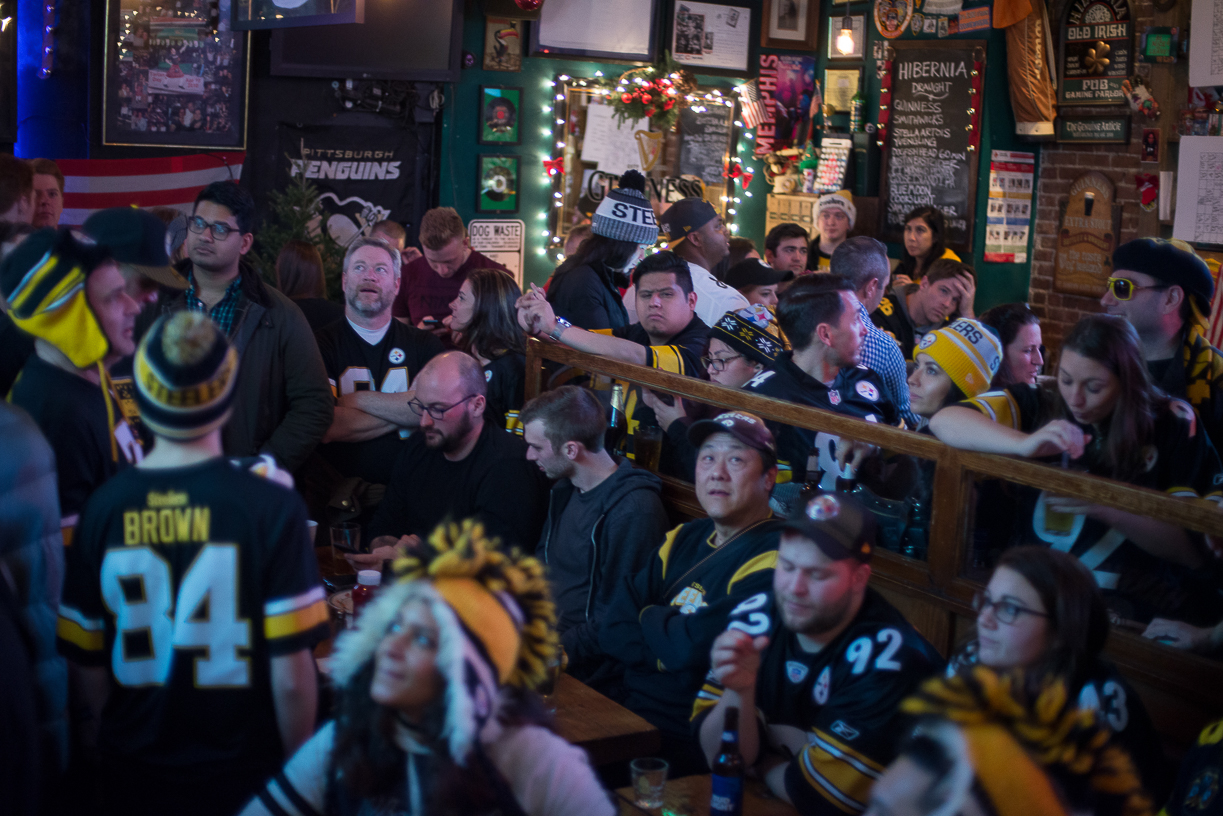
There are easier cities to drink in than New York. Plenty of places offer cheaper pours, shorter waits, roomier seating, and bartenders with more time to chat. Yet Bar NYC, both as a shorthand for the city’s drinking culture and as a lived experience, still holds a place that other cities struggle to replicate. It is not simply about cocktails, draft lines, wine lists, or a room with dim lights and polished shelves. It is about how bars in New York function as extensions of the street, the neighborhood, and the city’s restless social life.
Spend enough time here and the distinction becomes obvious. A bar in New York is rarely just a stop for a drink. It is where first dates recover from awkward beginnings, where theater workers decompress after midnight, where finance teams blow off steam at six, where line cooks eat late and fast, where tourists overpay for a skyline view without regretting it, and where long-time residents silently mark the changing economics of a block by what replaced the old corner place. The bar is both entertainment and urban evidence.
That is why Bar NYC remains essential. It tells you who is here, what they value, how they spend, what neighborhoods are becoming, and what parts of old New York refuse to disappear.
The city reveals itself after you sit down
Walking New York gives you one version of the place. Riding the subway gives you another. Sitting in a bar gives you the version that breathes.
You notice it in the pace first. Midtown bars often carry the compressed energy of people who have fifteen minutes before the next obligation. In the West Village, a room may look effortless, but every table is fought over and every reservation was made with intent. In the Lower East Side, there is still a stubborn appetite for experimentation, whether that means natural wine, Japanese highballs, mezcal flights, or a cocktail menu that would have sounded absurd twenty years ago but now feels ordinary. In neighborhoods farther out, in Astoria, Jackson Heights, Crown Heights, Sunset Park, or the northern Bronx, bars often feel more rooted and less performative. The drinking is part of local life rather than a staged version of it.
That range matters. It is one reason the phrase Bar NYC has such staying power. It does not point to a single style. It points to density, contrast, and a level of specialization that only works in a city with enough people to support almost every niche. A place can survive by being a whiskey den, a dive with perfect burgers, a listening bar obsessed with vinyl fidelity, a rooftop for expense-account sunsets, or a neighborhood tavern that has not updated its interior since the Giuliani years. In many cities, one model dominates. In New York, coexistence is the story.
New York bars reward attention to detail
People often talk about restaurants when they discuss hospitality standards in the city, but bars can be a better test of discipline. There is less cover. The experience depends on timing, memory, atmosphere, and consistency.
A good New York bartender reads the room quickly because they have to. They know when to keep things moving and when to slow down for the guest who came in specifically for the amaro selection. They can manage a rush without making the whole space feel transactional. The best ones are part technician, part traffic controller, part neighborhood anthropologist. They remember your drink if you become a regular, but they also know how to make a first-time guest feel as if they stumbled onto something special rather than exclusive.
That professionalism can look casual from the outside. It rarely is. In a city where rent is high, labor is expensive, and attention spans are short, bars survive on repeated performance. Glassware matters. Ice matters. Music volume matters. Whether the host actually controls the door matters. Whether a room smells clean at 11 p.m. Matters more than many owners want to admit. The margin between a place that becomes beloved and a place that becomes forgettable is often narrow.
I have seen bars with excellent beverage programs lose people because the stools were uncomfortable and the lighting was harsh. I have also seen places with merely solid drinks stay packed for years because they understood energy. New York rewards operators who know that a bar is not a menu, it is a sequence of feelings.
The myth of the “best bar” misses the point
Visitors often arrive chasing lists. They want the top cocktail bar, the oldest tavern, the most famous rooftop, the hidden speakeasy behind the unmarked door. There is nothing wrong with that, and some headline spots are genuinely excellent. Still, the “best bar” question tends to flatten what makes the city interesting.
The real strength of Bar NYC is not singular greatness. It is situational greatness.
A martini at a polished room in Tribeca means one thing at 5:30 p.m. After a hard week. The same drink means something else at midnight in a place with a different crowd and a different soundtrack. A beer-and-shot special in a dive bar can be more memorable than a $24 cocktail if the room has character and the people around you are alive to the moment. A rooftop can be worth the premium once, maybe twice, because New York’s vertical drama is real. Looking at the grid from above with a drink in hand is undeniably part of the city’s appeal, even if the cocktail itself would not win awards in a blind tasting.
People who know the city well tend to choose bars not by universal ranking but by purpose. Are you trying to talk? Celebrate? Hide for an hour? Impress someone? Kill time before a reservation? End a night gently, or send it in a louder direction? New York offers a bar for each of those needs, and often several within a ten-minute walk.
Neighborhood identity still lives behind the bar
For all the talk about chain retail, rising rents, and the homogenizing effect of social media, neighborhood distinctions remain strong in New York bars. Some are subtler than they used to be, but they are there if you pay attention.
In older Manhattan enclaves, bars often operate with layered self-awareness. They know their history, their clientele, and their place in the mythology of the city. Some lean into nostalgia with dark wood and classic drinks. Others push against it with bright design and more global beverage programs. Brooklyn, long past the point where it needed to prove itself, offers a wider spread than outsiders sometimes assume. There are bars built around craft in the serious sense, places where fermentation schedules and spirit sourcing get discussed with near-academic rigor. There are also unpretentious local spots where the strongest point is that everybody can exhale.
Queens may be the borough most routinely underestimated by casual visitors, especially if their itinerary never leaves Manhattan and parts of Brooklyn. Yet some of the most satisfying nights out happen in bars that sit comfortably near family restaurants, late-night bakeries, and small businesses serving communities that shaped the city long before they became trend material. The Bronx and Staten Island have their own textures as well, often less curated for outside approval and therefore more revealing in a different way.
A city this large never fits into one narrative. Bar NYC matters because it keeps those parallel narratives visible.
The economics are brutal, and that raises the stakes
It is impossible to talk honestly about New York bars without talking about money. The romance is real, but the math is unforgiving. Rent, wages, insurance, licensing, utilities, product costs, build-outs, maintenance, and seasonal swings all bear down on operators. The result is that every successful bar in New York is solving an equation that grows harder every year.
This is one reason drinks can feel expensive, especially to visitors arriving from other U.S. Cities. A cocktail in the high teens or low twenties is no longer unusual. Beer is not cheap either in many neighborhoods, and wine-by-the-glass pricing can climb fast. That frustrates people, sometimes reasonably. Yet price alone does not tell the whole story. In New York, you are often paying for location, labor intensity, longer hours, stronger staff, and the simple fact that the room exists at all in a punishing commercial environment.
Of course, not every expensive bar is good. Some trade shamelessly on aesthetics and scarcity. Some design for photographs first and comfort second. Some confuse exclusivity with quality. But even those places are part of the city’s bar ecology. They reflect the ambitions and anxieties of New York itself, a place where status signaling and genuine craft often occupy the same address.
The more interesting question is whether a bar delivers value for the specific experience it promises. A no-frills neighborhood place that pours honestly, keeps the bathroom clean, and treats regulars well can deliver immense value. So can a destination cocktail bar where every detail is calibrated, if the execution justifies the bill. The disappointment comes when the concept is louder than the hospitality.
The social choreography is unlike anywhere else
New York bars teach people how to share limited space. You learn to angle your body, claim half a shelf, speak over a room without shouting, and decide quickly whether you are opening a tab or paying cash. You also learn that part of the city’s social style comes from necessity. When space is scarce, interactions are shorter, sharper, and often more direct.
That directness can be misread as coldness. It usually is not. In many bars, especially busy ones, courtesy looks efficient. A bartender who gets to you fast, takes the order cleanly, and moves on is not being rude. They are respecting the queue. A guest who hesitates too long over the menu during a rush is not pondering art, they are delaying service for everyone else. New Yorkers tend to appreciate competence because the city runs on compressed time.
At the same time, bars remain one of the few places where the city’s social walls can thin out. You can end up talking to a gallery assistant, a school principal, a visiting couple from São Paulo, a line cook finishing service, and a retired union electrician all within the same evening. Not because the city is magically egalitarian, it is not, but because bars create temporary common ground. Everyone is waiting for a drink. Everyone is reading the same room. Everyone is subject to the same noise level and stool shortage.
That mix is part of the thrill. It is also part of the education. If you want to understand New York beyond headlines and rent complaints, spend a few nights listening in bars that are not optimized for tourists.
Why older formats still matter
For all the innovation in the city’s bar scene, some of the most enduring pleasures remain stubbornly traditional. A well-made martini, a proper pint, a serious whiskey pour, a plate of olives, a bowl of peanuts, a burger served until late, a bartender who knows not to interrupt the second date unfolding at the corner table, these things still carry weight.
That continuity is not accidental. New York’s best bars understand that novelty ages quickly. Technique matters, but so does restraint. The bars that last tend to balance identity with usability. They may be known for one standout feature, but they also know how to function on an ordinary Tuesday when no one is there to be dazzled.
I have often thought that the healthiest bars in New York are the ones that can host both a special occasion and a casual drop-in without seeming confused about either. That flexibility is hard to build. Too much concept, and the place becomes rigid. Too little point of view, and it dissolves into background noise. The sweet spot is difficult to describe but easy to feel. It is the sense that a room knows what it is for.
Visitors often make the same mistake
Many first-timers overload their nights. They try to hit four neighborhoods, three reservations, and two famous bars in one evening. On paper, it sounds efficient. In practice, it turns the city into a checklist and leaves little room for the serendipity that makes New York memorable.
A better approach is to let one area unfold. Pick a neighborhood with range and spend the evening there. Have a first drink somewhere lively, move to a place better suited for conversation, then decide whether the night wants one more stop or a plate of food. This is how locals often experience the city, and it changes everything. You notice transitions rather than just destinations. You catch the way office crowds give way to dinner traffic, then to the later-night mix of service workers, date-night lingerers, and people who insist they are having “just one more.”
If there is practical wisdom worth carrying into Bar NYC, it is this: choose rhythm over volume. The city opens up when you stop trying to conquer it.
Service, memory, and the making of a regular
Becoming a regular in New York is one of the city’s quieter satisfactions. It does not happen because you announce yourself. It happens because you return, tip fairly, treat staff like professionals, and understand the room’s unwritten rules.
Once that relationship forms, even lightly, the city changes. A bar that once felt crowded and anonymous begins to feel placed in your life. The bartender remembers your usual order, or at least remembers that you switch from beer to whiskey depending on the day. The host can tell at a glance whether you are meeting someone or want a solitary seat. You become less of a transaction and more of a known quantity.
That matters in a city famous for churn. Neighborhoods evolve, jobs shift, friends move, rents rise, beloved places close. A bar regularship offers a modest but real form of continuity. It gives urban life texture. It also reminds people that hospitality at its best is relational, not merely polished.
This is another reason the broader idea of Bar NYC continues to resonate. For all the city’s scale, bars are where New York becomes navigable at human size.
The future will change, but the role will endure
The city’s bar scene keeps absorbing new influences. Low- and no-alcohol programs are more sophisticated than they were even five years ago. Agave spirits have moved from niche curiosity to core category in many serious bars. More operators think carefully about acoustics, inclusivity, staffing models, and food offerings because guests have become more discerning and because margins demand broader appeal. Design trends come and go, from maximalist glamour to restrained minimalism to retro callbacks. Some experiments stick. Others fade quickly.
What does not change is the underlying function. New York needs bars because New York needs places where public and private life overlap. Apartments are often small. Schedules are fragmented. Work can be consuming. Friendship here is frequently maintained in transit, in snippets, in planned windows that need a place to happen. Bars absorb that pressure. They provide a semi-public room in a city that never has enough of them.
When people say they want the real New York, they are usually asking for more than landmarks. They want evidence of the city’s temperament. They want motion, friction, style, ambition, fatigue, humor, and surprise in one hiberniabar.com Bar NYC frame. A good bar can offer all of that in ninety minutes.
That is why Bar NYC remains a must-experience part of the city. Not because every drink is transcendent, or every room historic, or every bill reasonable. It remains essential because bars in New York still do what the city itself does at its best. They compress difference into shared space, demand a little alertness, reward curiosity, and leave you with a sharper sense of where you are. Few urban experiences are more distinctly New York than that.
Hibernia Bar
401 W 50th St
New York, NY 10019
(212) 969-9703
FAQ About Bar NYC
What is there to do in Hell's Kitchen, NYC?
Explore the restaurants and bars along Ninth Avenue, catch a Broadway show nearby, or visit the Intrepid Museum on the Hudson River. Hibernia Bar is at West 50th Street and Ninth Avenue, a convenient stop before or after a show.
What are some bars in New York City that serve good food?
Hibernia Bar in Hell's Kitchen serves wings, burgers, fish and chips, and shepherd's pie. Its kitchen lists a 2 a.m. closing time, which makes it an option for dinner after a show or a game.
How far is Hell's Kitchen from Times Square?
Hell's Kitchen is just west of Times Square. From Broadway and West 45th Street, Hibernia Bar is roughly 0.6 miles away, or about a 12-minute walk depending on crowds.